I remember getting frustrated in art class at school. My skills couldn’t turn what I saw in my mind into a “proper” painting. My patient art teacher tried to explain the difference between a “realistic” painting and artwork that interpreted what I saw. “If you want it to be EXACTLY like real life, why not use a camera?” It’s a fair point. (I am a better photographer than I am a painter!)
Being “realistic” is a double-edged sword. Photo-realistic doesn’t guarantee it’s worth looking at the picture! A dull, boring subject can be realistically dull and boring.
Art is about communicating, documenting, recording and interpreting life. Once the artist moves beyond a direct representation, the end result is the product of skill combined with having something to say (good art is produced when the viewers find meaning, pleasure, and emotion in the work).
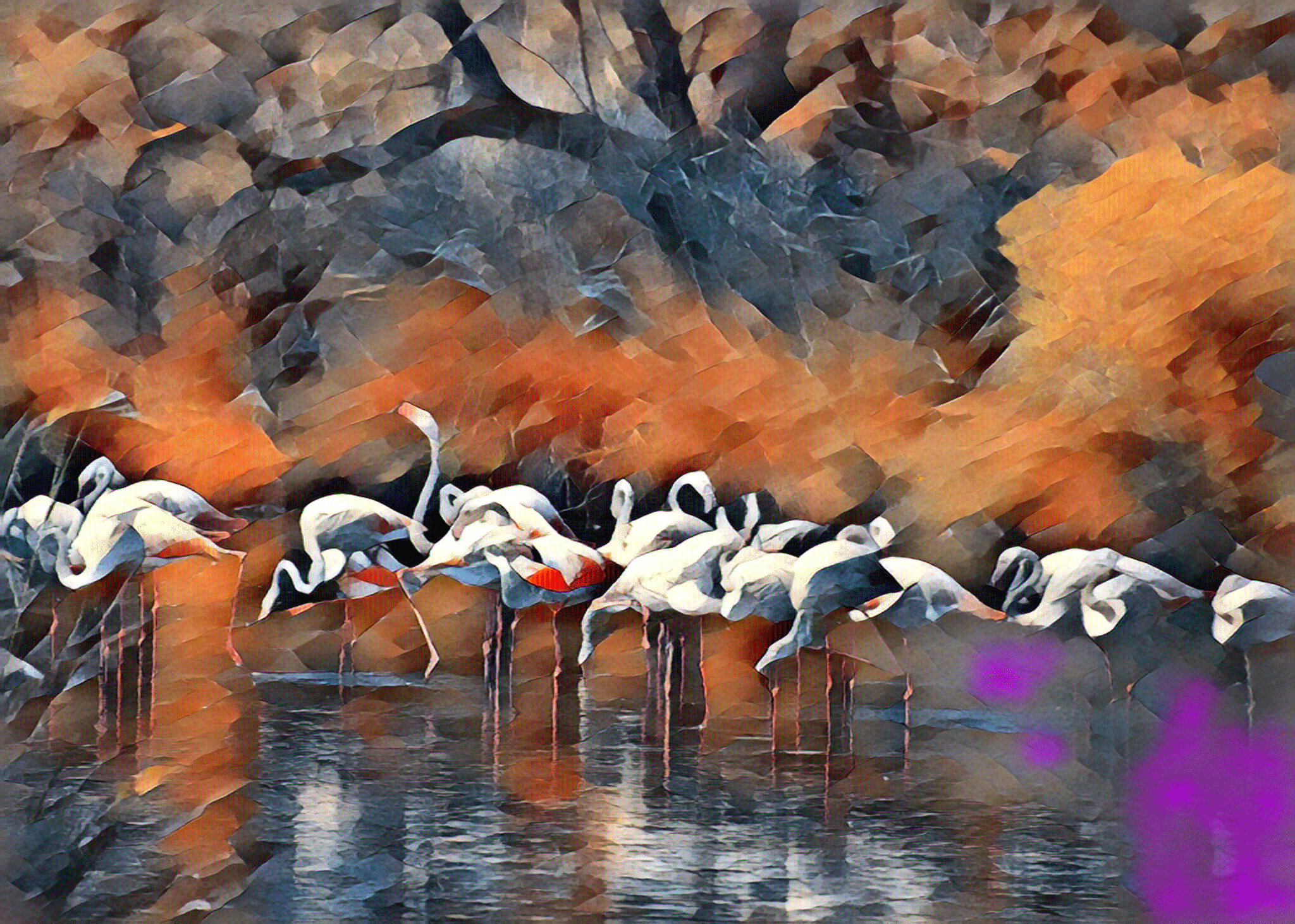
My picture is of flamingos in a lake in Southern France on a very hot day. I know that because I took the photo. Not a bad photo… but slightly disappointing to me. The magic of the experience didn’t transfer into the image.
So I tweaked it. Since I don’t often paint anymore, I used clever computer software to manipulate the digital image: result above, in an “Impressionistic” style. The software interpreted the light, trees, water, and birds using enhanced colours and “brushwork.” You may like it- or not! I can imagine the imagination of Manet or Renoir “seeing” the scene like this. ( But I doubt if I could have painted it myself in any convincing manner!)
When we try to represent God, or explain theology, or understand human behaviour we must, I think, do so recognising we speak/write/paint “as we see it”. Experience is filtered through our upbringing, education, psychological health, personal conviction, doubts, and ignorance! We are not yet fully mature or complete- we may well be wrong about some things.
We are communicating. There is something to be said, and our interpretation is worth considering.
Jesus taught by using stories- and often puzzled those listening! Then the motley crew of disciples spent their lives sharing the message: the four Gospels represent Jesus from different perspectives, interpreting history through their own understanding. Essentially, we do the same- we say it “as we see it” and with as much integrity and maturity we possess. At the very least, let’s try and mark our “life-art” with attractive and non-boring pictures: if we make people think and react, we’ve done our job. Preferably without being dull or boring…
 The Reflectionary