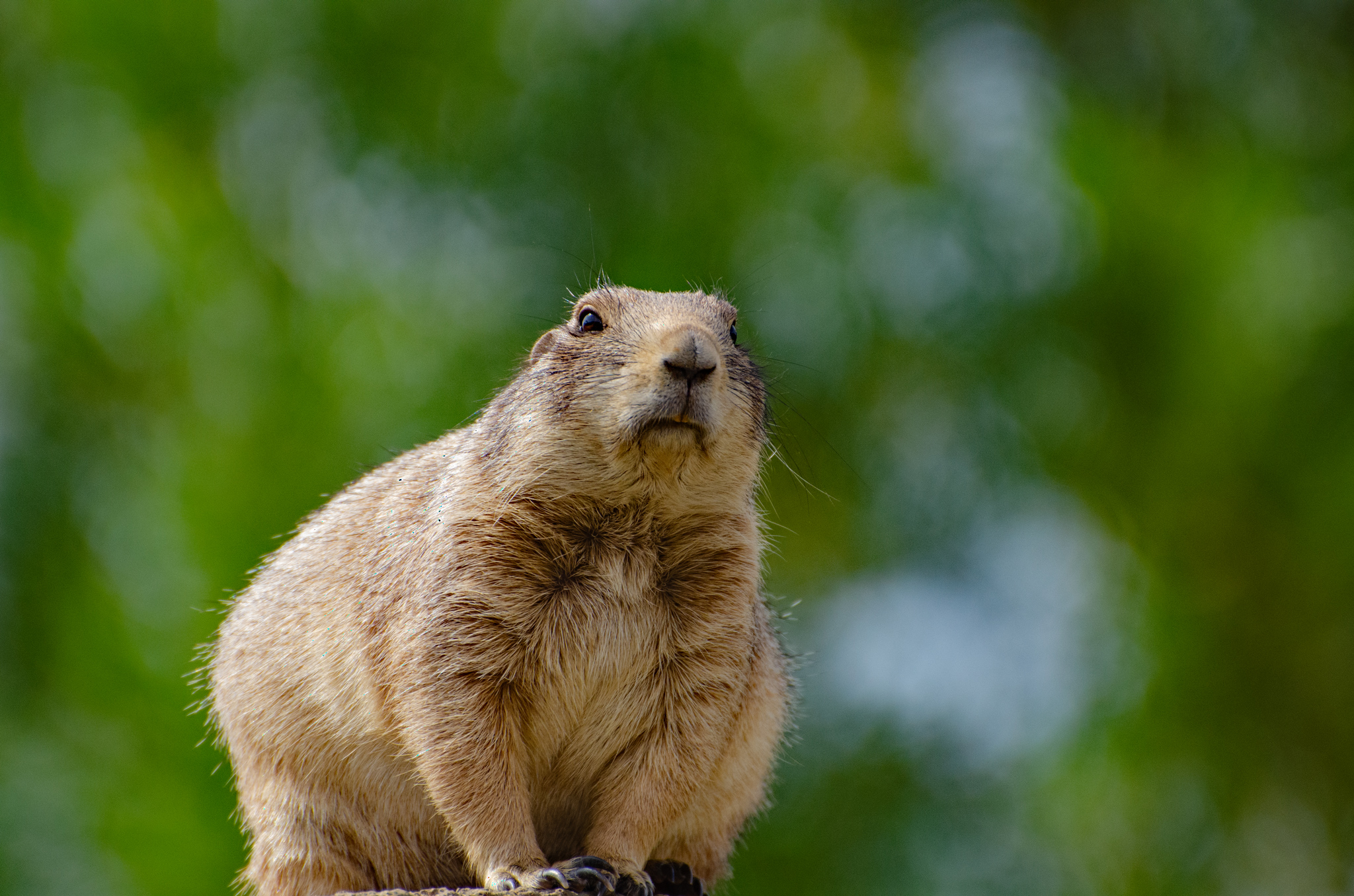
Did you know that prairie dogs live in large communities called towns? Highly sociable, and capable of complex communication within their society, these cute rodents benefit the environment by digging extensive tunnels. Aerating the soil, and helping with good drainage, studies have shown they are good for the environment.
There is one caveat: on the North American prairies, the tunnels can be very dangerous for horses & riders. The weight pressing down can collapse the tunnel roof, causing leg injuries to the horses and cattle. This has meant that the big ranches have tried to control numbers of prairie dogs: most of the sub-species are doing OK, but a couple of species are now endangered. The biggest threat is human “control” via poison and burrow destruction.
Prairie dogs contribute to biodiversity, and their grazing habits improve the land for bison. In fact, the prairie dog is recognised as a “keystone species” vital to many other animals and insects. Other mammals share their burrows, taking shelter from predators, and using abandoned tunnels for nesting.
Related to squirrels, chipmunks and marmots, the cute and inquisitive dogs do NOT make good pets. They need space and a large social grouping for healthy life. They would also make quite a mess of your lawn and roses! Zoos and wildlife parks can host colonies, but the numbers have to be monitored carefully to match the population to suitable ground. Looking after animals that are expert diggers presents security challenges. The “Great Escape” is only a nights’ digging from reality…
Studying environments and their inhabitants is vital science. Discovering how suitably “designed” these rodents are is quite amazing. Creatures that might be dismissed as a “nuisance” or pest are actually essential for a thriving biosphere. These little chubbies are truly “added value” in the equation of survival. We would miss them for many reasons- and the world would be a poorer place without prairie dogs.
Humans have often spent more time arguing over the questions of creation and evolution than we have spend on enjoying the rich diversity of life on Earth. Perhaps we should appreciate more and argue less?
Ask the animals, and they will instruct you; ask the birds of the air, and they will tell you. Or speak to the earth, and it will teach you; let the fish of the sea inform you. Which of all these does not know that the hand of the LORD has done this? The life of every living thing is in His hand, as well as the breath of all mankind.
 The Reflectionary