Happy Monday, peeps, and perhaps happy September-weather-that-actually-feels-like-September-not-mid-August-in-Death-Valley.
 We have a reflection on the foolishness of the cross ^Z^Z^Z^Z^Z bronze snake, and a beautiful confession based on John chapter 3. A reminder that Harvest resources, if you missed them last week, can be found here and Remembrance resources, here.
In the coming week, I’m looking forward to a development meeting for my first Out of the Box story, and I hope that will appear on the website in due course. Keep a look out for The Glass Bridge.
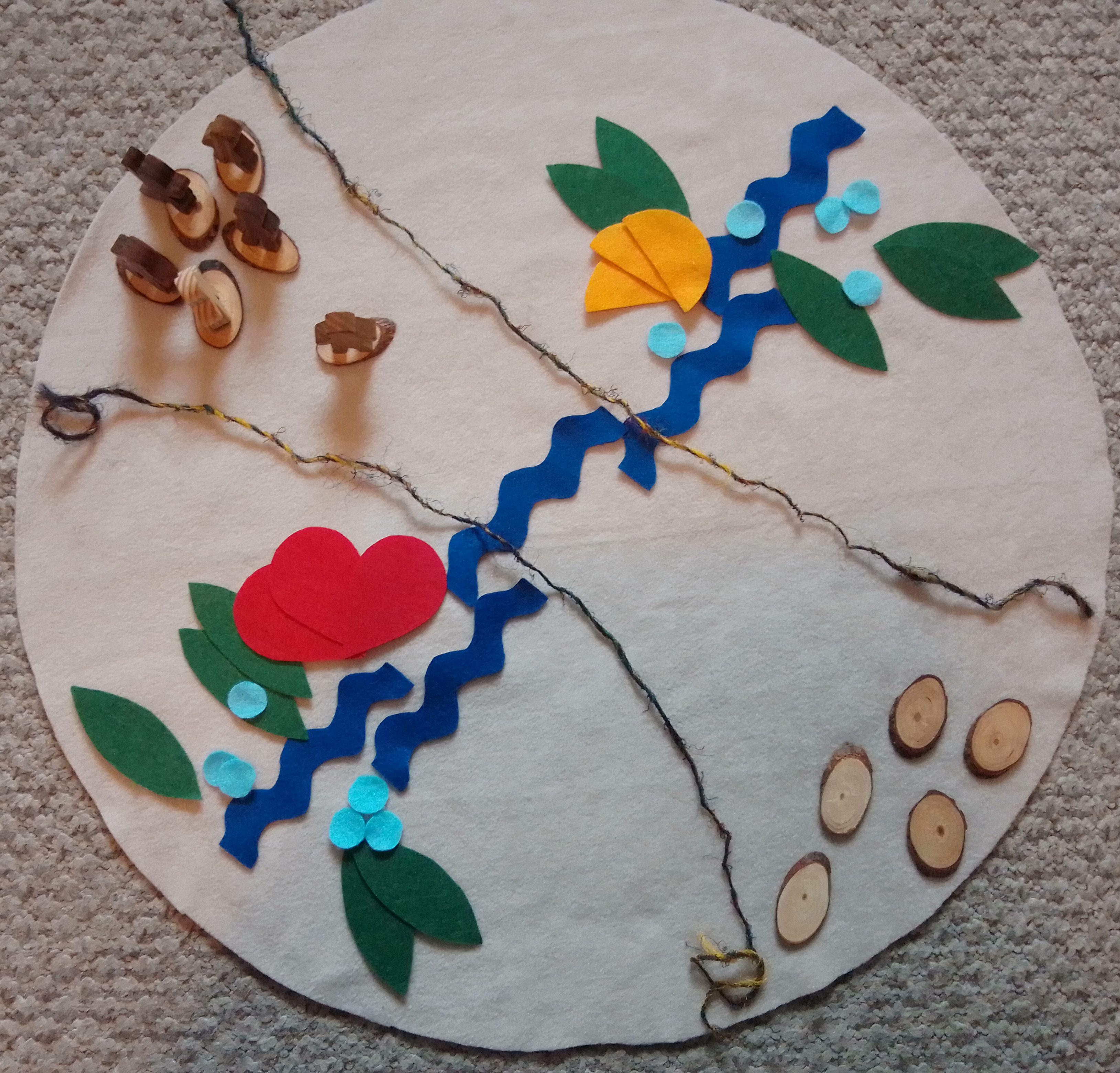
If you are unfamiliar with Out of the Box, I recommend taking a look. It’s a method of interactive story-telling and it is simply beautiful. I’ve just been rehearsing the Remembrance story and it nearly had me in tears.
Numbers 21:4-9
We don’t have to go very far into this (admittedly odd passage) to find the root cause. “ … but the people became impatient on the way.”
Yup, that old chestnut again. “We were so much better off in Egypt.” You have to say it in a whingy voice. Go on, read it again. You’ll get the mood so much better. “We were so much better off in Egypt. There we had pots of stew and cucumbers and melons. All we have here is this crummy manna and I’m tired and thirsty and my feet hurt!” Throw rattle out of pram.
The back of John Goldingay’s Numbers for Everyone has the rhetorical question, “Who are the people of God? Cowardly, contemptuous, distrustful, whining ingrates?” On the strength of this story (and a load of others), the answer is a resounding YES!
But before we draw ourselves up to our full self-righteous height, we’d do well to consider that we are the people of God, too, and we can be heard complaining that the Passover, the Exodus, the water from the rock, the manna, the quail, the pillar of fire by night and cloud by day, they were just side shows. What I want, God, what I really want is a nice cucumber*. Then I’ll be happy.
* Substitute [better job / significant other / healing / etc] as appropriate.
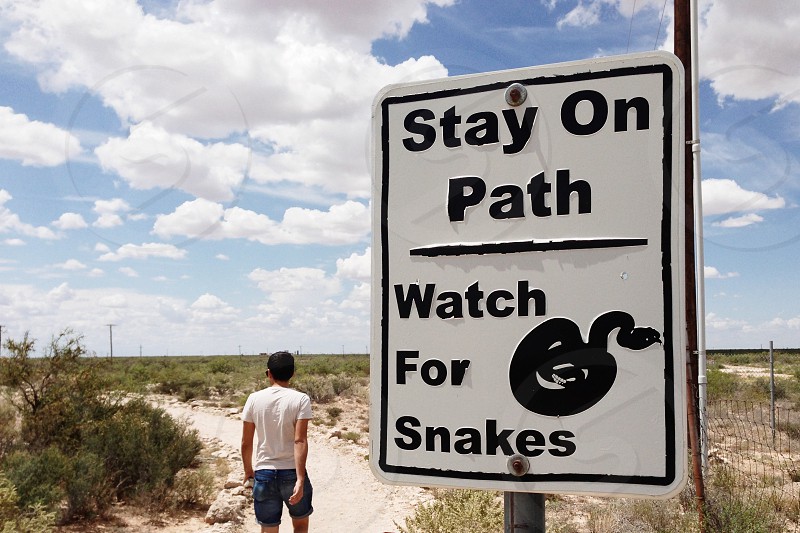 Enter the snakes.
It’s interesting that Jesus chose this unedifying passage from Israel’s past as a picture of his forthcoming crucifixion. I mean, what the heck? Wouldn’t the Day of Atonement have been a better metaphor? Or Passover? Or even Naaman washing in 66the river? Why the heck did Jesus choose these stupid people looking at a stupid snake on a stupid stick? It makes no sense. There is no way in God’s good earth that just looking at a lump of copper-based alloy balanced on a pole is going to cure you of a snake bite.
I mean, at least with Day of Atonement and Passover and Naaman’s bath there was something practical to do. Some cost. You slaughter a bunch of animals – your best animals, mind, not some cheapy mark-downs. Or you flee your home in the middle of the night, leaving behind job, possessions and that really nice vase you had as a wedding present. Or you take seven humiliating baths in a river (and watch out for the leeches!) Now that’s what I call a proper salvation. You’d feel you’d done a decent job at the end of all that entrail-burning, or after picking the pondweed out of your hair. No pain, no gain, right?
Nope.
God’s solution to the snake problem was … another snake! And no one had to do anything other than Moses who had to make the stupid thing. The people didn’t have to give up anything, make a sacrifice, pray, wash, or even touch it. Just look at the snake. Makes zero sense.
But I think that’s the point.
God’s people were being their usual obnoxious selves and God (to quote Derek Tidball’s Bible Speaks Today commentary) “presents his gift of salvation to undeserving rebels who have despised his gifts, spurned his mercy, rejected his word and slandered his name.” And what do these sorry excuses for God’s children have to do to receive this salvation? Nothing. Just trust God. That is all. The fact that it makes no sense is the whole point.
If Moses had said, “Here, drink this potion and you’ll get better,” or, “Put a poultice of these herbs on the bite and it’ll get better,” what do you think the Israelites would have done? They’d have got better and thanked the local herbalist. Probably bought him a pint at the next pub. God? Nah. We got better on our own, thanks.
God had to use something that was attributable solely to his goodness and mercy, not anything that the Israelites could ascribe to their own work. (As it was, they ended up worshipping the snake by 2 Kings 18. You can’t fix stupid.)
And I think that’s why Jesus chose this weird story as a picture of his crucifixion. It’s such a stupid solution that you know no human could have made it up. (An excellent counter to the ‘The Bible’s just a bunch of made-up stories’ argument. If someone invented it, it’d make a lot more sense than this.) As Paul said, “For the message about the cross is foolishness to those who are perishing, but to us who are being saved it is the power of God.” (1 Cor 1:18)
There’s the obvious parallel of Jesus being raised up on a cross like the snake, but the crux (excuse the pun) is that there is No. Human. Contribution. None. No anti-venom potion. No herbal poultice. There was nothing that the people of Israel did to heal their snake bites. There was nothing that the disciples did to secure eternal salvation for all. Nothing. They just watched while Jesus did everything. My part is simply to trust that God knows what he’s doing and accept the gift so graciously given.
Even if it is a stupid snake.
Interesting aside. This incident takes place in the region of Timna, where there are extensive copper mines dating back to the 5th millennium BCE.
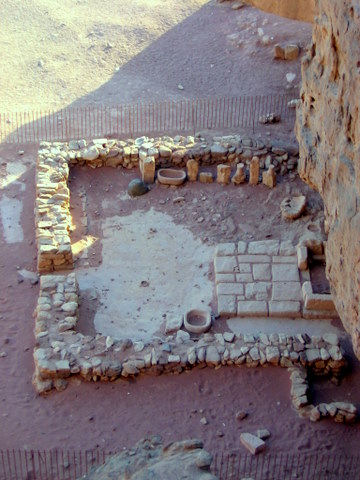
Recent excavations found a small Egyptian temple for the use of miners. When the Egyptians abandoned the site around 1150 BCE, the temple was taken over by the Midianites. (Moses, you may remember is married to a Midianite and his father-in-law, Jethro, is a ‘priest of Midian’.)
The Midianites erased the Egyptian gods and covered the temple with curtains to make a tabernacle-like structure. Inside this tent, in the holy place, archaeologists found a copper serpent.
(Not Moses’ one. Hezekiah destroyed that. But Moses’ God-tent and snake were clearly still fresh in the collective memory. See Wenham, TOTC Numbers, p 156)
Liturgy for Proper 19
Num 21:4b-9, Ps 98:1-5, 1 Cor 1:18-24, Jn 3:13-17
Confession and Absolution
Just as Moses lifted up the serpent in the wilderness, so must the Son of Man be lifted up.
Lord, have mercy.
Lord, have mercy.
That whoever believes in him may have eternal life.
Christ, have mercy.
Christ, have mercy.
For God so loved the world that he gave his only Son,
so that everyone who believes in him may not perish but may have eternal life.
Lord, have mercy.
Lord, have mercy.
For God did not send the Son into the world to condemn the world,
but in order that the world might be saved through him.
Praise be to God for his enduring mercy.
Praise be to God, who forgives all who earnestly repent,
through the merits of Jesus Christ his son,
and who equips us with his Spirit
that we might live to his praise and glory.
Praise be to God: Father, Son and Holy Spirit.
Amen.
Blessing and Dismissal
May you sing a new song to the LORD, for he has done marvellous things.
May you make a joyful noise to the LORD,
may you break forth into joyous song and sing praises,
for he has remembered his steadfast love and faithfulness.
All the ends of the earth will see his salvation.
And the blessing of God Almighty …
Go, and proclaim Christ crucified,
a stumbling block and a foolishness,
but to those who are called, the power and wisdom of God.
By the grace of God we will.
Amen.
 The Reflectionary