At the end of 2024, an estimated 123.2 million people worldwide were forcibly displaced due to persecution, conflict, violence, human rights violations etc. (UNHCR)
To put that in context, 123 million is nearly double the entire population of the UK.
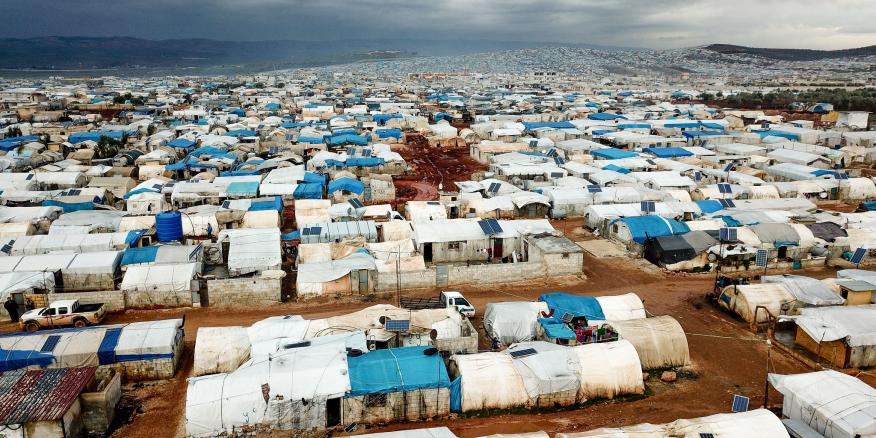 I’ll say that again in case, like me, you didn’t quite believe your ears. The total of displaced people in the world is everyone in the UK plus everyone in, say, Kenya.
Just picture that. You, your family, your friends, everyone in your street, everyone in your town, everyone in your entire country packing their life in a rucksack and leaving for … well, nowhere. How long could you survive on the contents of a rucksack?
And then there are the trapped ones. Those who cannot flee, who wake every morning in a warzone. I don’t know which is worse.
I cannot imagine what it is like for the people of Ukraine, Gaza, Syria, Sudan, Afghanistan etc, etc, etc. I cannot imagine what it is like when the people you dread come pounding on your door and haul off your husband, your brother, your son – and then you hear the gunshots.
I cannot imagine what it is like when the nightmares are real, when you live in terror every day.
I cannot imagine what it was like for the people of Jerusalem when the Babylonians marched in and obliterated their county, their worship, their lives, their everything. Jeremiah rightly laments as he watches God’s temple torn down and God’s people dragged away into slavery.
Her foes have become the masters; her enemies prosper … her children have gone away, captives before the foe.
Nothing changes, does it?
So where is God in these dark times? Where is God in the bombed-out hospital? Where is God when the thing you’ve been praying wouldn’t happen, happens?
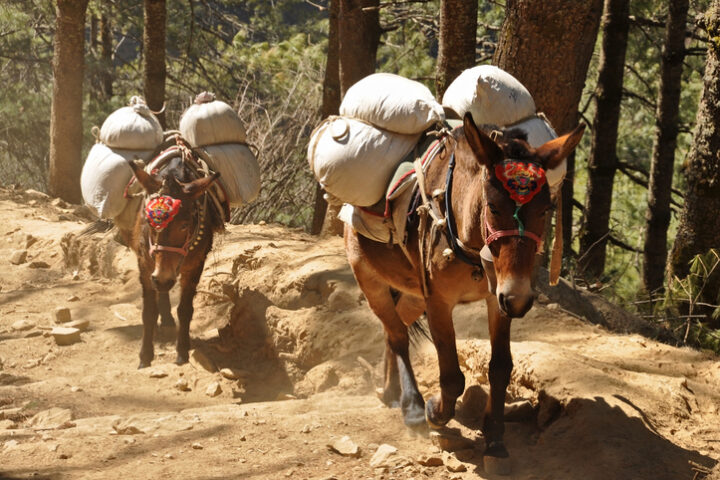 Each of the nations around Israel had their own god, and those gods were tied to the nations. That’s why Namaan asked for two donkey-loads of soil to take with him back to Damascus (2 Kings 5). He wanted to worship the God of the Israelites, and he thought he could only do that on Israelite land.
So when the Babylonians took God’s people from their land, that was taking them from their God, too. Yahweh could neither see nor hear them in exile, nor could he act to save them. They were on their own.
By the rivers of Babylon – there we sat down, and there we wept when we remembered Zion. On the willows there we hung up our harps. How could we sing the Lord’s song in a foreign land? (Ps 137)
Oh, but how wrong!
There is nowhere, nowhere, we can go that is beyond the sight and care of our God.
In the story of Jonah, the runaway prophet explains that he worships, not a titchy god of some town or other, but the Big Boss, the God who made everything and who rules everywhere. “Crikey!” say the sailors. “We’re really in a pickle now!” (I paraphrase.)
I am a Hebrew,” replied Jonah. “I worship the LORD, the God of the heavens, who made the sea and the dry land.” Then the men were even more afraid and said to him, “What have you done?”
The God we worship is not limited to a time or a place. He does not exist only from 10:00 to 11:30 on a Sunday morning and only at the pointy end of church. God exists at the breakfast table on Monday morning and on your daily commute. God exists in your lunch break, in the doctor’s waiting room and when you’re crying into a pillow.
God exists in the humdrum and in the grotty places of life. God exists in the refugee camp. God exists in the warzone. God exists in the hospital and at the graveside. God exists in the job centre and in the foodbank. God exists in the divorce court and in the prison. God exists in the brothel and behind the pub. God exists in the night shelter and the shop doorway.
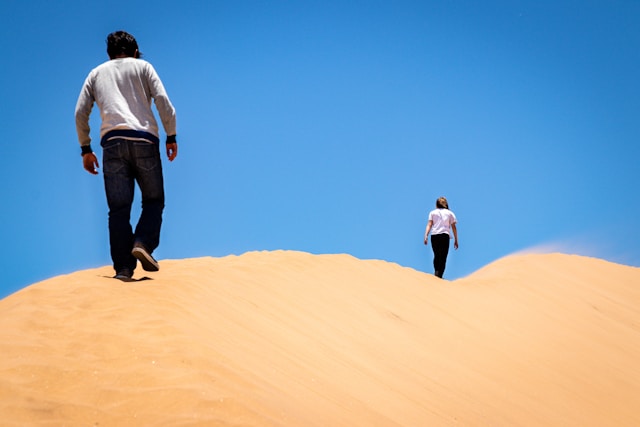 God was with his people in Babylon just as much as he was with them in the Jerusalem temple. When they walked away from everything they had ever known and loved, when they walked into guilt, regret and loss, their God walked with them.
This is the most glorious Good News. Wherever you are, wherever your loved ones are, God is not far off. God is near. Just a single breath away. And this is reason to hope: not because life is always good, but because God is.
But this I call to mind, and therefore I have hope: The steadfast love of the LORD never ceases, his mercies never come to an end; they are new every morning; great is your faithfulness.
Lamentations 1:1-6 and 3:19-26
How lonely sits the city that once was full of people! How like a widow she has become, she that was great among the nations! She that was a princess among the provinces has become subject to forced labour.
She weeps bitterly in the night, with tears on her cheeks; among all her lovers, she has no one to comfort her; all her friends have dealt treacherously with her, they have become her enemies.
Judah has gone into exile with suffering and hard servitude; she lives now among the nations; she finds no resting place; her pursuers have all overtaken her in the midst of her distress.
The roads to Zion mourn, for no one comes to the festivals; all her gates are desolate; her priests groan; her young girls grieve, and her lot is bitter.
Her foes have become the masters; her enemies prosper because the LORD has made her suffer for the multitude of her transgressions; her children have gone away, captives before the foe.
From daughter Zion has departed all her majesty. Her princes have become like stags that find no pasture; they fled without strength before the pursuer.
…
The thought of my affliction and my homelessness is wormwood and gall! My soul continually thinks of it and is bowed down within me.
But this I call to mind, and therefore I have hope: The steadfast love of the LORD never ceases, his mercies never come to an end; they are new every morning; great is your faithfulness.
“The LORD is my portion,” says my soul, “therefore I will hope in him.” The LORD is good to those who wait for him, to the soul that seeks him. It is good that one should wait quietly for the salvation of the LORD.
 The Reflectionary