 A horse walks into a bar. The landlord says, “You’re in here a lot. Are you sure you’re not an alcoholic?”
The horse ponders for a moment and replies, “I don’t think I am.” Poof! The horse vanishes.
At this point you might smile because you know the famous postulate, ‘I think, therefore I am.’ But if I’d mentioned that at the start, that would be putting Descartes before de horse. Ba-dum chhh!
Why do I mention this? Because it’s relevant to the passage. Honest it is. It’s about something we all do (the putting the cart before the horse bit, not the walking into a bar and vanishing bit).
This week’s passage is the famous bit at the end of Proverbs that describes the wife of noble character. Yes, we’re talking about ‘biblical womanhood’. Buckle in, folks; it’s going to be a bumpy ride.
For starters, that word ‘biblical’. It’s a loaded term and comes with the baggage. If my view is ‘biblical’ then disagreeing with me is disagreeing with God. If you contradict me, you are not a Christian.
 Let’s put that out with the cat right now. No human, NO human, has the perfect mind of God. We all view Scripture through a lens and anyone who tells you otherwise is a blind fool.
Hopefully, my views correspond with my interpretation of the Bible (if not, why do I hold them?), but it is all too easy to put Descartes before de horse (You see, I told you it was relevant) by deciding our interpretation first and reading the Bible to fit.
You don’t that?
Sorry folks, we all do.
Even those brought up in Christian families, if fact, especially those brought up in Christian families, come to the Bible with a pre-loaded set of ideas about how the world works, assumptions based on our culture, our upbringing, media, friends, role models etc. And we read those values into the Bible. We all do. We can’t help it.
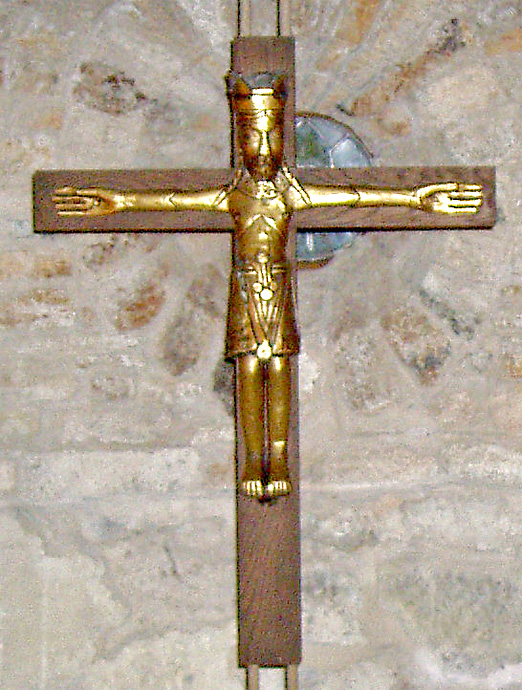 In some ways that’s not bad. It’s called enculturation. We want to make the word of God applicable to our situation and time. I’m white and my friend Precious is black, so I probably imagine Jesus as more pale-skinned than she does. That’s not a problem. Jesus came specifically to make God visible, to be God With Us, in flesh like ours. I once visited on old church in Aarhus, Denmark, and was fascinated by the crucifix there which shows Jesus as a Viking warrior. Jesus wasn’t Scandinavian, but I don’t have a problem with this portrayal.
However, enculturation can become a problem when our cultural norms and assumptions override what we read in the Bible, and we don’t notice it. We think in a certain way and assume that God thinks that way too.
That is what enabled some Christians to own slaves, believing it was God’s order that white people were better than black people based of a whacky interpretation of Gen 9:25. This attitude resurfaced recently as a certain presidential hopeful claiming on prime-time TV, in front of millions, that Haitian immigrants are abducting and eating pets. (Fact Check: Totally Untrue.)
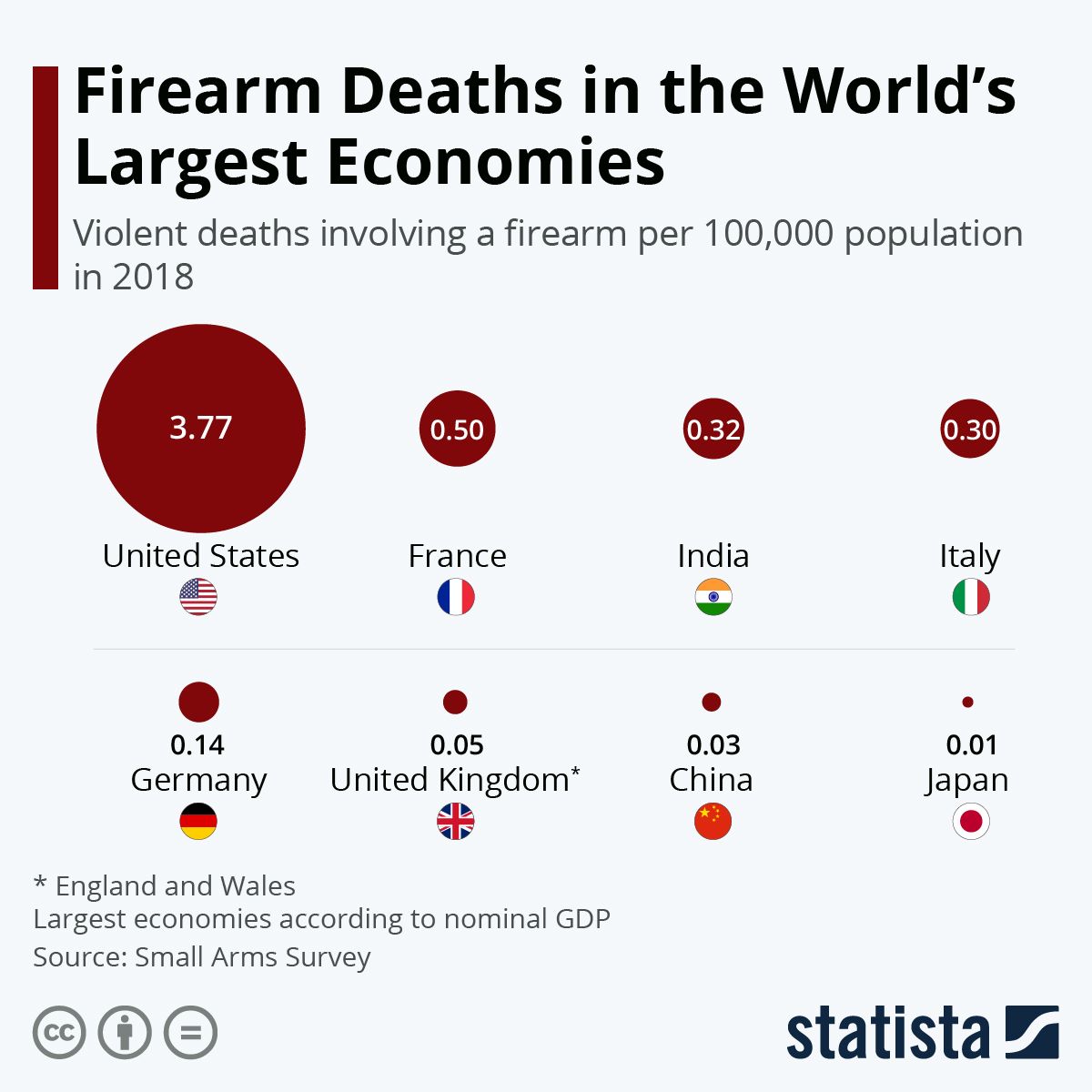 It’s what enables some Christians to insist that their right to carry a machine gun into a supermarket is more important than the lives of schoolchildren based on, ummmn …
I may be being dim, but I don’t read that in my Bible. Note, that was me playing the ‘biblical’ card, so I’ll state here and now that this is my interpretation. Yours may differ (but I’d be fascinated to see the justification if you think carrying guns is OK).
So, having noted that we are all biased and we all come with pre-loaded interpretations, Wikipedia’s article on ‘biblical womanhood’ starts with this paragraph:
Biblical womanhood is a movement within evangelical Christianity, particularly in the United States. It adopts a complementarian or patriarchal view of gender roles, and emphasizes passages such as Titus 2 in describing what Christian women should be like. According to author Rachel Held Evans, it is driven by the conviction that “the virtuous woman serves primarily from the home as a submissive wife, diligent homemaker, and loving mother.
‘Submissive wife, diligent homemaker, and loving mother.’ Many women and girls are told that this is the ideal of a Christian woman and that roles outside this are, at best, irrelevant or second class, at worse, ungodly. I have been told, and I kid you not, I have been told that the only time I am doing anything of value is when I’m cooking or cleaning. Apparently, having a research degree in maths counts for nothing.
 The article above quotes Held Evans saying that adherents of that view of ‘biblical womanhood’ have “refused to acknowledge” that their interpretation involves a “certain degree of selectivity”. I’d say so, cos that sounds nothing like the woman I read about in Prov 31. She runs a business. She’s the boss. She puts in the hours. She does the accounts. She deals in property.
NB, I’m not saying all women should be CEOs, or anything else. There’s no ‘should’ in the matter. That’s the point. Women can be homemakers if that’s what they want – so can men. Women can be entrepreneurs if that’s what they want, or artists, or preachers or engineers. No ‘should’. Ditto blokes. God is a god of infinite creativity and we are wrong to put limits on God’s creation. (Why are we still having to say this in 2024?)
 So, Prov 31. I’m not going to go though it verse by verse, but I am going to pick up on one word, what the NIV renders ‘noble’. Other English translations have: accomplished, capable, competent, excellent, good, noble, perfect, strong, valiant, virtuous, wise, worthy.
With the exceptions of ‘strong’ and ‘valiant’, those are quite feminine adjectives. ‘Accomplished’ puts me in mind of Jane Austen and playing at the pianoforte!
From the entry in STEP Bible by Tyndale House
חַ֫יִל (cha.yil)
Meaning: strength, worthy, might, ability, efficiency, wealth, army. Related word: hero.
All words we would usually associate with males, aren’t they?
 In its 250+ occurrences, when not translated as army or wealth, it’s mostly valour or valiant (ESV). Notably, David is ‘skilful in playing, a man of valour, a man of war’ while Ruth is ‘a worthy woman’ and the Prov 31 woman is ‘excellent’.
I’m not a Hebrew scholar, so I wouldn’t know, but it does feel like the adjective has been down-played when referring to women. Men are ‘valiant’ or ‘brave’, women are ‘good’ or ‘virtuous’. Hmmn. Predetermined ideas of what ‘biblical womanhood’ is like, perchance?
(Even more fascinating, the Septuagint uses ἀνδρείαν = ‘manly’ to describe this paragon of womanliness! I leave that with you.)
We all read the Bible with glasses on, we can’t help it. But let’s acknowledge that we wear them, and maybe try to read around the sides?
Liturgy Resources for Proper 20
Psalm 1, James 3:13 – 4:3, 7-8a
Confession and Absolution
Happy are those who do not follow the advice of the wicked,
Lord, forgive us.
Forgive us and help us.
or take the path that sinners tread,
Lord, forgive us.
Forgive us and help us.
but their delight is in the law of the Lord.
Lord, forgive us.
Forgive us and help us.
Gracious God,
who forgives all who truly repent,
renew, restore and revive us,
that we be not like the chaff that the wind drives away,
but like trees planted by streams of water,
which yield their fruit in its season.
Amen.
Blessing and Dismissal
May you be filled with the wisdom from above:
Be pure, be peaceable, be gentle and willing to yield,
be full of mercy and of good fruits,
be just and sincere,
and the fruit of righteousness, which is sown in peace
will make peace in you,
and the blessing …
Draw near to God, and he will draw near to you.
Amen.
 The Reflectionary