This is one of the (few) times when I’m grateful for the weirdnesses of the lectionary. Did you notice the missing verses from today’s reading in Nehemiah? For once, it’s sensible. Verses 4 and 7 are the Hebrew equivalent of ‘red lolly, yellow lorry’, or ‘unique New York’. Can you say them five times fast?
But I’m more interested in verse 3:
[Ezra] read from [the book of the law of Moses] facing the square before the Water Gate from early morning until midday, in the presence of the men and the women and those who could understand.
A bit of context: The people of God were exiled to Babylon, fast-forward seventy years, there’s a change of dictator and the new guy says they can go back home. A few dribble back and rebuild the temple in Jerusalem. Then they realise that over the last three generations they’ve forgotten how to live God’s way (not that they were very good at it before, hence the exile), so Ezra comes to Jerusalem along with a bunch more folks. And this is where we came in.
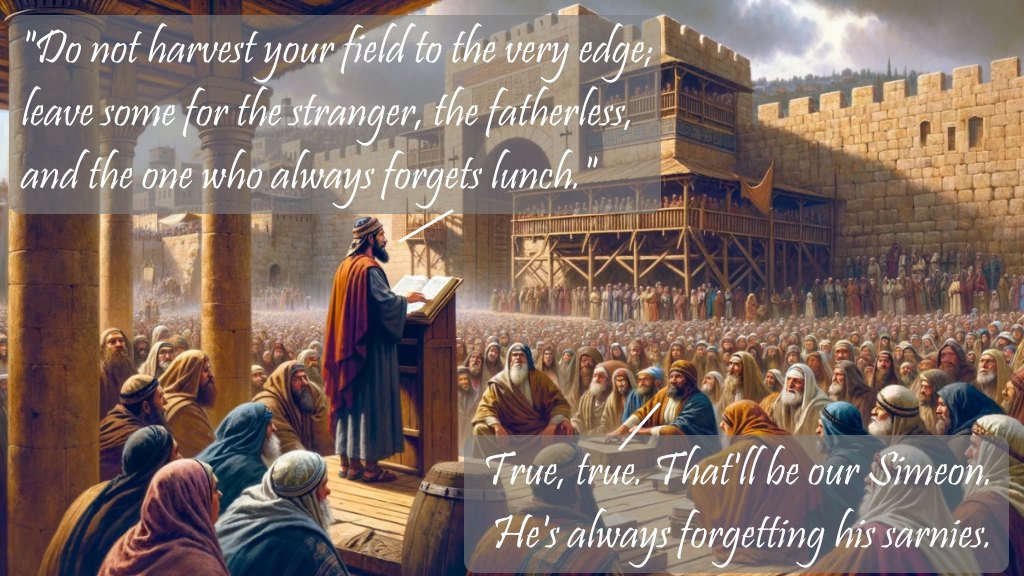
Ezra stands up and reads aloud the book of the law of Moses from breakfast to lunchtime. Based on these beautiful recordings, the whole five books of the Pentateuch (Gen to Deut) take well over 15 hours, so Ezra was likely just reading Deuteronomy. That takes little under three hours non-stop, maybe six hours if we allow pauses for explanation and loo breaks. That’s about right.
But leaving aside the six-hour sermon, take a look at who is listening. The men, the women, and all who could hear with understanding. That’s revolutionary!
In that patriarchal society, the norm for any assembly would be only the men. They are the only ones with agency. They are the only ones who make decisions. They are the only one who get to choose what they do. Everyone else does what the Pater Familias tells them.
But not here!
Ezra spoke to the men and the women and all who could hear with understanding. Some versions render that last phrase as ‘those who were old enough to understand’ but I strongly object to that translation. There is no mention of age in the text, none at all. Adding an age restriction to God’s covenant people is imposing our own prejudices on the text. ‘Cos obviously, kids are too stupid to know God, right?
 I’ve heard this verse used to justify excluding children from worship services on the basis that they wouldn’t understand, with a subtext of ‘and anyway they’d annoy the adults’, as if church were a Christian version of Warner Hotels. Adult-only spa breaks with none of those annoying kids in the way.
Now, I grant you, a babe in arms wouldn’t have the attention span to listen to the whole of Deuteronomy without falling asleep, but the same could be said of me. Children aren’t born without souls, y’know. When Jesus used a child as an example of faith, the word used is ‘mikron‘, literally a teeny, a tot, a little kid. The type we often fob off with colouring sheets. (Having said that, colouring sheets are great for adults too.)
The Western, Protestant, cerebral way of worshipping places a lot of emphasis on cognitive ability (woe betide any visitor to an Anglican church who can’t read the hymn book / projector / service booklet / Bible / notice sheet!), by contrast, Orthodox churches welcome even the youngest of God’s children into worship.
Who cares that some don’t know the words? They can absorb the wonder of God’s glory from the majesty of the music, the richness of the imagery, the reverence of the liturgy, the beauty of the surroundings. Much as I’m a fan of faith with understanding, we can discover more of God from wallowing in wonder than from a wordsearch (or from many a sermon). As always, we need both.
So, before we impose our didactic and developmental assumptions on children’s spiritual awareness, let’s remember that those who worshipped with Ezra were ‘all who could hear with understanding’, however young (or old) they were. And let’s be generous on the boundaries.
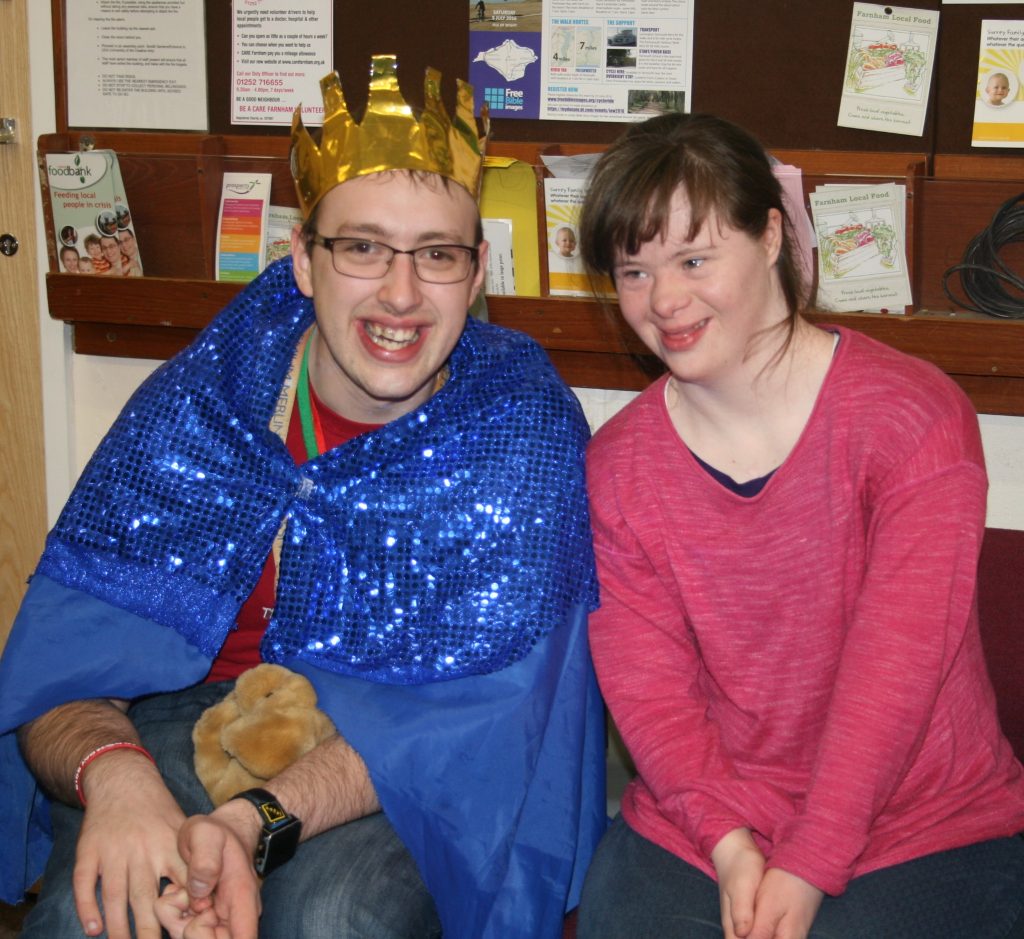
Nobody would dream of telling Great Aunt Mable she can’t come to church just because she’s ‘not quite all there’ and her hearing aid keeps playing up. Nobody would exclude George who has learning difficulties and the vocabulary of a four-year-old. Nobody would boot out lovely Maria on the basis that she’s recently arrived from Ukraine and her English isn’t fast enough to keep pace with the liturgy.
We wouldn’t do that, would we? We’d assume they’re worshipping God in their hearts even if they can’t manage the words. (Nod your head and smile. “Yes, we would.”) What’s so different with children?
If you’re interested, I’ve written a couple of academic papers on children’s spirituality, including addressing this very verse. Links below. If your institution does not have access and you really want to read, drop me a line. I’m sure I’ve got a copy somewhere. (Probably propping up a wobbly table.)
Liturgy Resources for the Third Sunday after Epiphany
Psalm 19
Confession and Absolution
Let us confess our sins to almighty God.
The law of the Lord is perfect, reviving the soul.
Forgive us, good Lord, and revive us.
The decrees of the Lord are sure, making wise the simple.
Forgive us, good Lord, and make us wise.
The precepts of the Lord are right, rejoicing the heart.
Forgive us, good Lord, and set our hearts rejoicing.
Keep your servant also from wilful sins, that they rule not over me.
Then will I be blameless, and innocent of great transgression.
May the words of my mouth and the meditation of my heart
be pleasing in your sight, O Lord, my Rock and my Redeemer.
God, the merciful and gracious, forgive you all your sins and restore you in his likeness.
Amen.
Blessing and Dismissal
May the words of the Lord enlighten your eyes,
May they be to you as golden honey, dripping from the comb.
May they keep you forever in awe.
And the blessing …
Go and tell the glory of God,
proclaiming his handiwork from day to day.
Amen.
 The Reflectionary